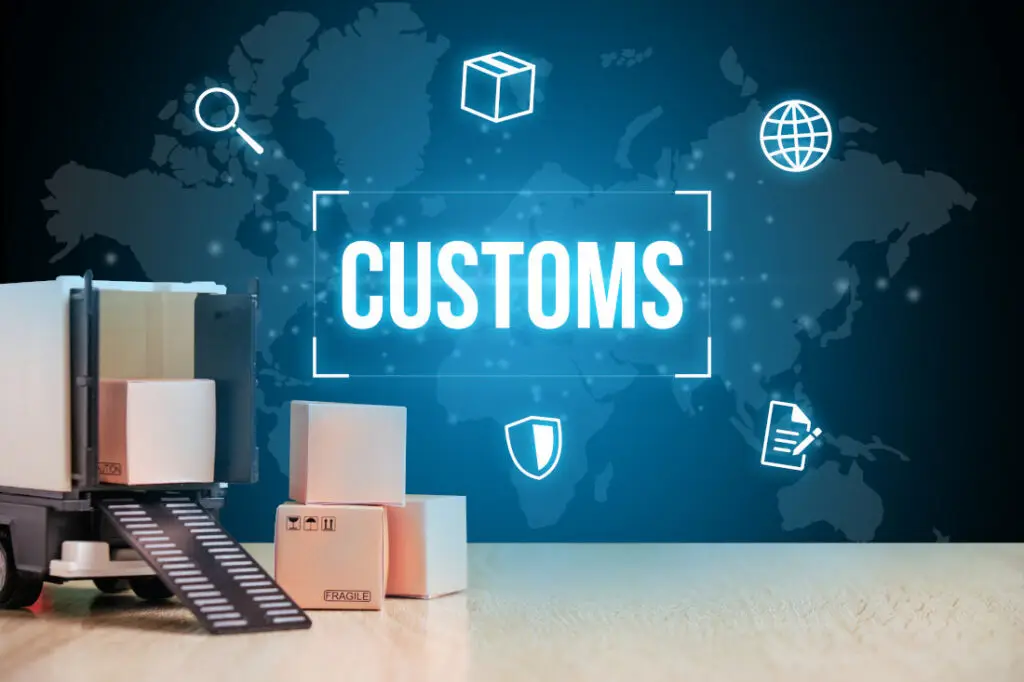
Customs is where many shipments lose time. Rules, duties and taxes differ from country to country, and one missing or inconsistent document can keep goods in the port for days while storage charges run. This guide explains what customs clearance involves when you import into or export from Tunisia, which documents you need, what it costs and how to avoid the most common delays.
What customs clearance is
Every shipment that crosses a border must be declared: what it is, what it is worth, where it comes from and who sends and receives it. Customs checks the declaration, calculates the duties and taxes, may inspect the goods and then releases them. In Tunisia, declarations are filed electronically through Tunisie TradeNet (TTN), usually by a customs broker on behalf of the importer or exporter.
The documents you need
- Commercial invoice: seller, buyer, description, quantities, unit prices, total value and the Incoterms rule.
- Packing list: number of packages, weights and dimensions, matching the invoice.
- Transport document: bill of lading (sea), air waybill (air) or CMR consignment note (road).
- Proof of origin: a EUR.1 movement certificate or an origin declaration to claim reduced duty on EU goods, or a certificate of origin.
- Product-specific papers when they apply: sanitary or phytosanitary certificates for food, technical control or conformity certificates, import licences for regulated goods.
Importing into Tunisia, step by step
- Before shipping: agree the Incoterms rule, check the customs code (HS code) of your goods and whether they need a licence or a technical control.
- Domicile the purchase at your bank, which most imports need so the supplier can be paid abroad.
- Send us the documents as soon as the goods leave: we check them against each other and prepare the declaration before arrival.
- On arrival the declaration is filed, duties and taxes are paid and customs decides whether to inspect.
- After release the goods leave the port and are delivered to your door.
Exporting from Tunisia
Exports need an export declaration, the commercial invoice and packing list and, for most food products, a phytosanitary or sanitary certificate. For goods going to the European Union, the EUR.1 proof of origin lets your buyer pay little or no duty, which is often what wins the order. Our document checklist for shipping to the EU lists every paper in one place.
What clearance costs
- Customs duties, set by the HS code and the origin of the goods.
- VAT on imports, at the standard rate of 19% for most goods, and other taxes for some products.
- The customs broker's fee for preparing and filing the declaration.
- Port, terminal and storage charges, which grow every day the goods wait.
Our landed cost calculator gives a first estimate of duties and VAT for an import into Tunisia.
Five things that hold goods at customs
- Invoice and packing list that do not match, in quantities or weights.
- A wrong or vague HS code, which leads to questions, a different duty rate or a fine.
- Proof of origin missing or filled in wrongly, so the reduced duty is lost.
- A licence or technical control requested only after the goods have arrived.
- Documents that reach the broker after the ship, so the goods wait and demurrage and storage charges start.
How we help
Our customs clearance team in Tunisia checks your documents before the goods leave, files the declarations for imports and exports and follows the shipment until it is released. Regular shipments to the same country can also be consolidated: one set of formalities instead of several. If you want clearance to become routine, we can advise you on classification, origin and your documents before your next order.
Planning a shipment? Request a quote with every fee included upfront, or talk to our team in Tunisia: +216 70 295 255, info@kyranislogistics.com.

No Comments