Export packing has to survive much more than a trip to a local customer. Goods may be lifted by forklifts and cranes, shaken on rough roads, rolled by the sea, and exposed to heat, cold and humidity. They may also be opened and repacked during a customs inspection. Good packing protects your goods, lowers the risk of claims and can even reduce the freight cost.
Choosing the right pallet
Two pallet sizes dominate international trade:
- Euro pallet (EUR): 1200 × 800 mm. The standard in Europe, and well suited to road transport and European warehouses.
- ISO or industrial pallet: 1200 × 1000 mm. Common in many other markets and in industry.
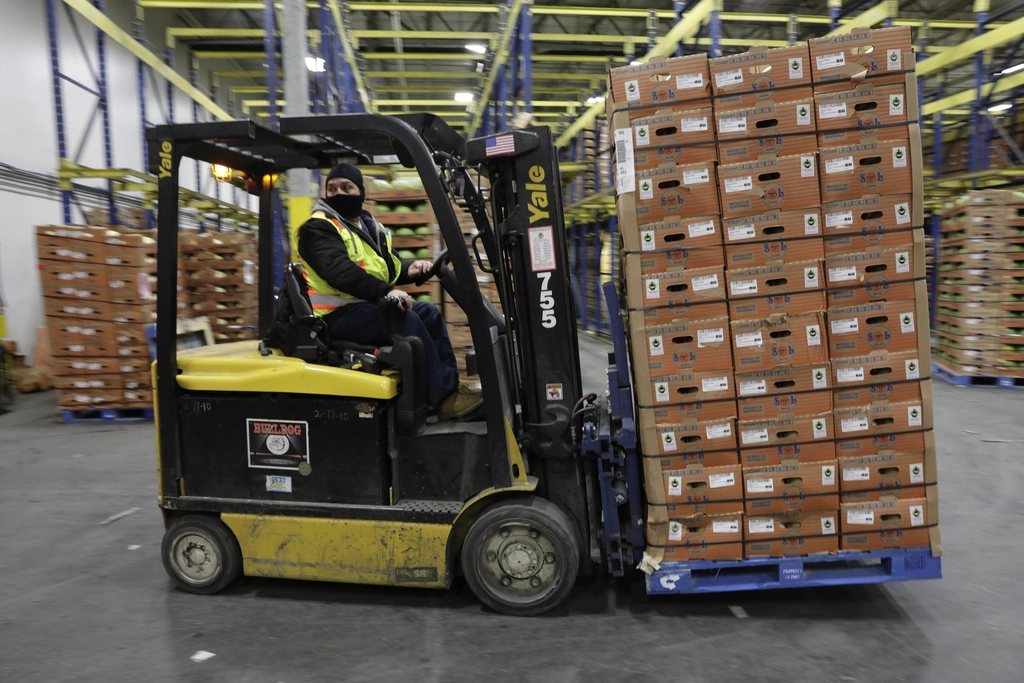
Choose the size that your receiver’s warehouse can handle. A pallet that does not fit the racking at destination will cause extra handling. Avoid goods that hang over the edge of the pallet: overhanging cartons are crushed easily, and the load becomes unstable. Ask your receiver whether there is a maximum height or weight per pallet.
Wooden packaging and ISPM 15
Untreated wood can carry insects and diseases from one country to another. To prevent this, most countries apply the international standard ISPM 15 to wooden packaging such as pallets, crates, boxes and dunnage.
- The wood must be treated, usually by heat treatment, to a set core temperature for a set time.
- Treated wood carries a clear mark: the IPPC symbol, a country code, a producer or treatment provider number, and the treatment code, such as HT for heat treatment.
- Processed wood products such as plywood, particle board and OSB are generally exempt, because their manufacture already treats the wood.
Goods on unmarked or non-compliant wood can be refused, treated or destroyed at the destination, at the importer’s cost. Buy your pallets from a certified supplier and check the mark before loading. Plastic or metal pallets are an alternative for some flows.
Building a stable load
- Heavy at the bottom, light on top. Put the strongest cartons at the base.
- Stack in columns for maximum strength, with corners aligned. Interlocking patterns give more stability but less vertical strength. Choose according to the weight of the load.
- Use edge and corner protectors to spread the pressure of straps and protect the cartons.
- Stretch wrap the load to the pallet, not just the cartons to each other. Start at the base, include the pallet itself and overlap each layer.
- Add straps for heavy or tall loads.
- Use a top sheet or cover to protect against dust and water.
- Use strong cartons. Double-wall corrugated boxes are a good minimum for export. Fill empty space inside cartons so the contents cannot move.
Inside a container, fill gaps between pallets with airbags or dunnage, and secure heavy items to the lashing points. Spread the weight evenly along the floor of the container.
Moisture: the hidden risk at sea
A container that travels from a warm port to a cold one, or the reverse, can suffer from “container rain”. Moisture in the air, the wood and the packaging condenses on the cold steel roof and drips onto the cargo. The result can be wet cartons, rust, mould and labels that peel off.
- Use dry pallets and packaging. Wet wood brings a lot of water into a closed box.
- Add desiccant bags or strips inside the container, hung along the walls.
- Use vapour barrier bags with desiccant for sensitive goods such as machinery or electronics.
- Avoid loading in rain, and do not leave doors open in humid weather.
Labels and marks
Every package should be easy to identify, even when it is separated from the rest of the shipment. Mark each package on at least two sides with:
- the consignee’s name or shipping marks, and the destination;
- the package number and total, for example “3 of 12”;
- gross and net weight, and dimensions where useful;
- the order or invoice number;
- handling symbols where needed, such as “this way up”, “fragile” or “keep dry”;
- dangerous goods labels and UN marks, if the goods are regulated.
The marks must match the packing list and the transport document. Customs and receivers rely on them to check the cargo.
Packing and cost
Good packing does not always mean more packing. Freight is charged on chargeable weight, so a smaller, well-built load can cost less to ship. Kyranis Logistics offers consolidation and warehousing, and our team in Tunisia can advise on how to pack and palletise for air, ocean or road freight before your goods are collected.
Planning a shipment? Request a quote with every fee included upfront, or talk to our team in Tunisia: +216 70 295 255, info@kyranislogistics.com.