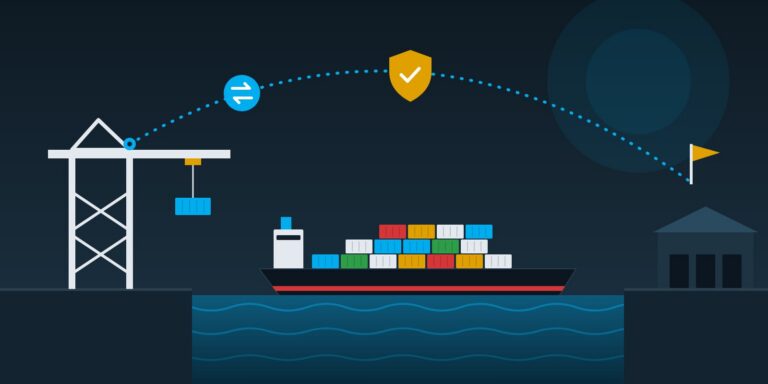
Every international sale must answer the same questions. Who books and pays for the transport? When does the risk of loss or damage pass to the buyer? Who clears customs? The Incoterms rules answer these questions in three letters. They are published by the International Chamber of Commerce (ICC), and the current version is Incoterms 2020.
A good contract names the rule, the place and the version, for example “FCA Sfax, Incoterms 2020”. Without a precise place, the rule leaves room for argument.
What Incoterms do and do not cover
Incoterms define the delivery point, the transfer of risk, the split of costs and the customs formalities for export and import. They do not decide when ownership of the goods passes, how and when the buyer pays, or what happens if the contract is broken. Those points belong in the sales contract itself.
There are 11 rules. Seven can be used for any mode of transport, including air, road and multimodal shipments. Four are only for sea and inland waterway transport.
The seven rules for any mode of transport
- EXW (Ex Works): the seller makes the goods available at its own premises. The buyer does everything else, including loading and export clearance.
- FCA (Free Carrier): the seller hands the goods, cleared for export, to the carrier named by the buyer. Risk passes at that moment. Under Incoterms 2020 the parties can agree that the buyer’s carrier issues an on-board bill of lading to the seller, which helps with letters of credit.
- CPT (Carriage Paid To): the seller pays the main transport to the named destination, but risk passes when the goods are handed to the first carrier.
- CIP (Carriage and Insurance Paid To): as CPT, but the seller also buys cargo insurance. Under Incoterms 2020 this cover must be at the high level of the Institute Cargo Clauses (A), unless the parties agree otherwise.
- DAP (Delivered at Place): the seller delivers the goods to the named place, ready for unloading. The buyer unloads and clears import.
- DPU (Delivered at Place Unloaded): the seller delivers and also unloads the goods at the named place. DPU replaced the old DAT rule, and the place no longer has to be a terminal.
- DDP (Delivered Duty Paid): the seller delivers to the named place and pays import duties and taxes.
The four rules for sea and inland waterway
- FAS (Free Alongside Ship): the seller places the goods alongside the vessel at the named port of shipment.
- FOB (Free on Board): the seller loads the goods on board the vessel named by the buyer. Risk passes once the goods are on board.
- CFR (Cost and Freight): the seller pays the sea freight to the destination port, but risk passes when the goods are on board at origin.
- CIF (Cost, Insurance and Freight): as CFR, plus insurance paid by the seller. For CIF, the minimum cover is only the Institute Cargo Clauses (C), which cover a limited list of events.
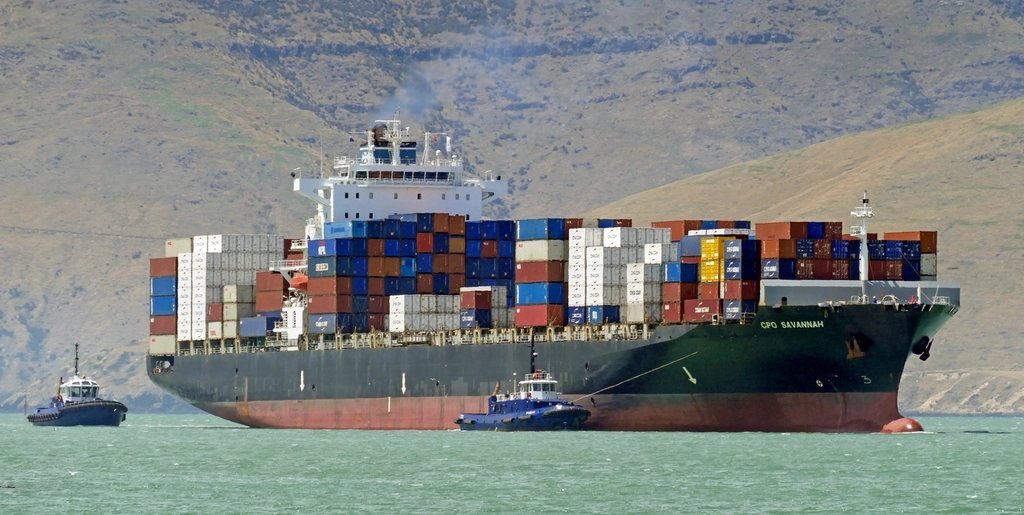
These four rules suit bulk goods and conventional cargo loaded directly onto a ship. For containers, which are usually handed over at a terminal or depot before loading, FCA, CPT or CIP are normally the better choice. With FOB or CIF, the seller loses control of the box at the terminal but keeps the risk until it is on board.
A quick comparison
| Rule | Mode | Risk passes to buyer | Main transport paid by | Insurance |
|---|---|---|---|---|
| EXW | Any | At seller’s premises | Buyer | Not required |
| FCA | Any | Handover to buyer’s carrier | Buyer | Not required |
| CPT | Any | Handover to first carrier | Seller | Not required |
| CIP | Any | Handover to first carrier | Seller | Seller, ICC (A) |
| DAP | Any | At destination, before unloading | Seller | Not required |
| DPU | Any | At destination, after unloading | Seller | Not required |
| DDP | Any | At destination, import cleared | Seller | Not required |
| FAS | Sea | Alongside the ship at origin | Buyer | Not required |
| FOB | Sea | On board at origin | Buyer | Not required |
| CFR | Sea | On board at origin | Seller | Not required |
| CIF | Sea | On board at origin | Seller | Seller, ICC (C) |
“Not required” means that neither party has to insure the other. In practice, the party that carries the risk should usually buy its own cover.
Choosing the right rule
There is no single best rule. The right choice depends on who has better access to transport, who knows the customs rules on each side, and how much control each party wants. A few practical points:
- EXW looks simple, but can be hard for a foreign buyer. The buyer has to handle export clearance in the seller’s country. FCA at the seller’s premises is often a cleaner option.
- DDP puts the import duties and taxes on the seller. That includes formalities in a country the seller may not know well. Check that you can legally act as the importer, or work through a local partner.
- The two “critical points” of the C rules. Under CPT, CIP, CFR and CIF the seller pays transport to the destination, but the risk passes much earlier, at origin. Make sure everyone understands this.
At Kyranis Logistics we work with all 11 rules every day, for exporters and importers across Tunisia and beyond. If you are unsure which rule fits a new contract, ask us before you sign. It is much easier to agree the right term at the start than to sort out a dispute after the goods have left.
Planning a shipment? Request a quote with every fee included upfront, or talk to our team in Tunisia: +216 70 295 255, info@kyranislogistics.com.