
This is the first edition of our market update: once a month, what moved in freight rates, routes, ports and rules, and what it means if you ship to or from Tunisia. Figures as of 7 November 2026.
Container rates: high, but holding
Drewry's World Container Index, the weekly average of spot rates on eight main east-west routes, stood at US$4,389 per 40-foot container on 5 November 2026. That is 1% lower than a week earlier, but 124% higher than a year ago. On the routes closest to Tunisia's imports from Asia, Shanghai to Genoa was stable at US$4,166 and Shanghai to Rotterdam fell 2% to US$3,615.
Carriers have announced new rate increases for mid-November, and Drewry expects Asia-Europe rates to stay stable next week. Cargo for Tunisia usually travels through a Mediterranean hub such as Gioia Tauro, Valencia or Malta and then on a feeder ship, so the index shows the direction, not your price.
The Strait of Hormuz: still closed to most ships
Since early March 2026 the Strait of Hormuz has been effectively closed to commercial traffic: the IMF's PortWatch counts one or two crossings a day, against a typical 85. The large container lines send their ships around the Cape of Good Hope, and some charge extra on the rare crossings. For Tunisia this means higher fuel costs, which carriers pass on through bunker surcharges, and longer, dearer routes for goods to and from the Gulf.
Suez and the Red Sea: a careful return
The shorter way to Asia is slowly reopening. According to the Suez Canal Authority, 166 large container ships passed the canal from July to September 2026, against 16 a year earlier. CMA CGM led the return; Maersk, Hapag-Lloyd, MSC and OOCL have brought ships back too, and COSCO some of them. Drewry warns that the threat near Bab el-Mandeb has not gone away. A route through Suez saves Asian cargo one to two weeks compared with the Cape, but services change often: ask which way your booking goes.
Tunisian ports: more cargo, new cranes
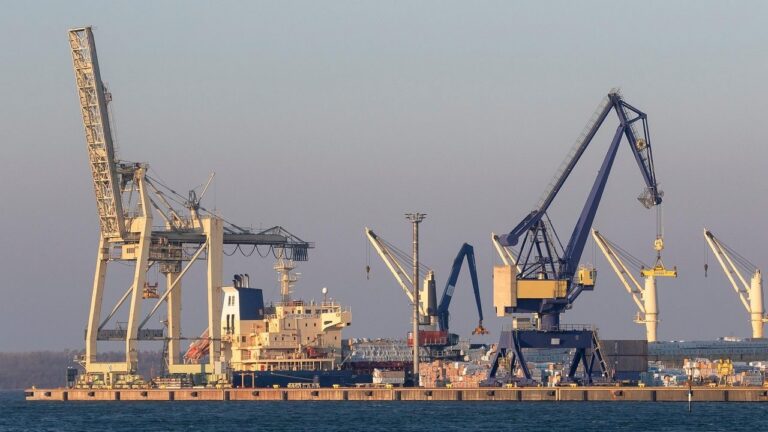
Tunisia's seaports handled 14.8 million tonnes in the first half of 2026, 7.3% more than a year earlier, according to the port authority OMMP. Radès, which carries about 58% of the country's trade, expects three new Konecranes Gottwald cranes at its container terminal between late November and early December 2026, later than the September first announced. The port authority is also looking for a private operator for a 25-year dry bulk concession at Radès, and a €50 million dredging contract signed with DEME in June will deepen three Tunisian ports.
Rules: carbon costs reach the freight bill
Under the EU emissions trading system, shipping lines this year pay for 70% of their 2025 emissions, and from 2026 every tonne counts: the emissions of 2026 are paid in full in 2027. Voyages between Tunisia and the EU count for half of their emissions. Carriers pass this on as an ETS surcharge, which you will see on Europe–Tunisia bookings.
The EU carbon border adjustment mechanism (CBAM) has been in its definitive regime since 1 January 2026. It covers iron and steel, aluminium, cement, fertilisers, electricity and hydrogen. EU importers of these goods need an authorisation, unless they bring in less than 50 tonnes a year, and the first annual declaration, for 2026 imports, is due by 30 September 2027. If you export such goods from Tunisia, fertilisers for example, your EU buyers will ask you for the emissions data of your products.
What we recommend this month
- Book cargo from Asia early in the month and ask how long the rate is valid: increases are announced for mid-November.
- Read the surcharges in your quote: bunker, emergency and ETS surcharges can move faster than the base rate.
- Ask which way your container goes, through Suez or around the Cape, and plan the transit time with it.
- Exporting steel, aluminium or fertilisers to the EU? Prepare the emissions data your buyers need for CBAM.
- Leave some margin at Radès until the new cranes are working. Our sea freight team plans it with you, and you can ask for a quote at any time.
Sources
- Drewry, World Container Index, 5 November 2026
- The Maritime Executive, Suez Canal highlights continued return of containerships, 13 October 2026
- Strait of Hormuz tracker (IMF PortWatch data), 7 November 2026
- Ports Europe, Tunisia's seaports handle 7.3% more cargo in H1 2026
- Ports Europe, Three new cranes due at Radès container terminal this year
- Ports Europe, Tunisia seeks private operator for 25-year dry bulk concession at Radès
- Ports Europe, news on the port of Radès
- European Commission, Reducing emissions from the shipping sector
- European Commission, Carbon Border Adjustment Mechanism
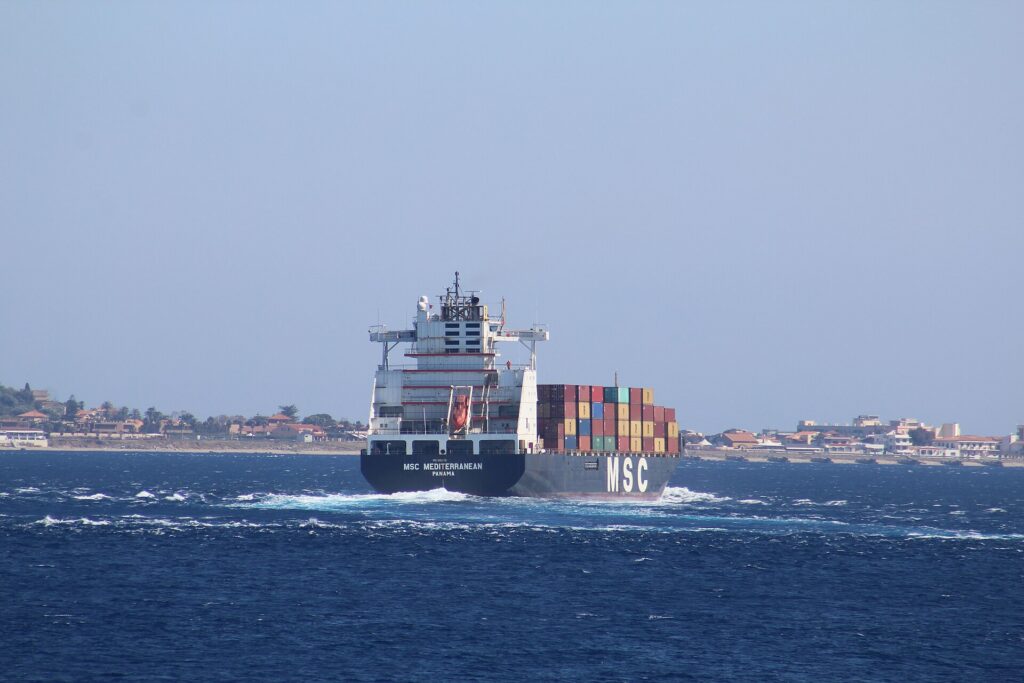
Photo: MSC Mediterranean in the Strait of Messina, by Oursana, public domain (CC0), Wikimedia Commons. Rates are spot rates from the index, without local charges; your price depends on the route, the date and the cargo.
Planning a shipment? Request a quote with every fee included upfront, or talk to our team in Tunisia: +216 70 295 255, info@kyranislogistics.com.

Comments
Ask a question or share your experience.
No comments yet. Be the first to ask a question.