
Tunisian exporters are often told to look beyond Europe. Our first Trends article showed that European demand drives most of the growth in 2026. This one looks at the rest of the map: the official figures for the first nine months of 2026 show which markets outside Europe are growing, and which are not.
Europe still sets the pace
From January to September 2026 Tunisia exported goods worth 50.4 billion dinars, 8.6% more than a year earlier, according to the National Institute of Statistics (INS). The European Union took 35.4 billion dinars of it, or 70.2%, slightly more than its 69.9% share over 2025. France alone buys 22.7% of Tunisian exports, Italy 16.6% and Germany 14.0%. The growth of 2026 is, for now, mainly a European story.
Africa: down 5.5%
Exports to Africa fell 5.5% to 4.7 billion dinars, 9.4% of the total. Four North African countries account for about four fifths of that amount, and three of them did not grow.
Libya remains Tunisia's largest African customer, with 3.6% of all Tunisian exports, but sales there were flat (+0.03%). Exports to Algeria fell 11% and to Morocco 22.1%. Egypt is the exception: sales rose 78.6%, from a much smaller base, to 269.5 million dinars.
Where it grows: Egypt and Saudi Arabia
The fastest growth outside Europe is in the Arab markets further east. Besides Egypt, exports to Saudi Arabia rose 52.1% over the nine months (the INS monthly note gives the change but not the value). Both are still small markets for Tunisia, but they are the ones moving, and both are reached by sea: Egypt through its Mediterranean ports, Saudi Arabia through the Suez Canal to its Red Sea ports.
Libya: more trade, but not more exports
Trade between Tunisia and Libya grew 26.5% over the nine months, to about 2.56 billion dinars, yet Tunisian exports stayed at 1.8 billion dinars: the growth came from goods coming the other way. According to L'Économiste Maghrébin, cement leads Tunisian sales to Libya with 204.4 million dinars, followed by medicines, nappies and other paper hygiene products, and shampoos.
What it means for transport
Each of these markets is reached in its own way. Libya and Algeria can be served by truck across the land borders as well as by sea. Morocco, Egypt and Saudi Arabia are served by container ship, often with a change of ship at a Mediterranean hub. Arab trade agreements, such as the Greater Arab Free Trade Area and the Agadir Agreement with Egypt, Jordan and Morocco, remove customs duties on goods of Tunisian origin, but only when the shipment carries the right certificate of origin.
What it means for your shipments
- Exporting to Libya or Algeria: compare road and sea for every shipment. A truck is often quicker for part loads, a container often cheaper for full ones. See road freight and sea freight.
- Egypt, Saudi Arabia or Morocco: have the certificate of origin issued before the goods leave, so your buyer pays no duty. For Morocco, read our market update on Maersk’s Casablanca capacity.
- Europe is still 70% of the business: see what drives it in Nearshoring to Tunisia: what the 2026 figures really show.
- A first shipment to a new market: check customs and documents with us before it leaves, not after. Ask us for a quote.
Sources
- INS: foreign trade at current prices, September 2026 (monthly note, PDF)
- L'Œil d'Afrique: Tunisian exports to Morocco, Algeria and Egypt, nine months of 2026
- L'Économiste Maghrébin: Tunisia–Libya trade, nine months of 2026
- Business News: who buys Tunisian goods in 2026
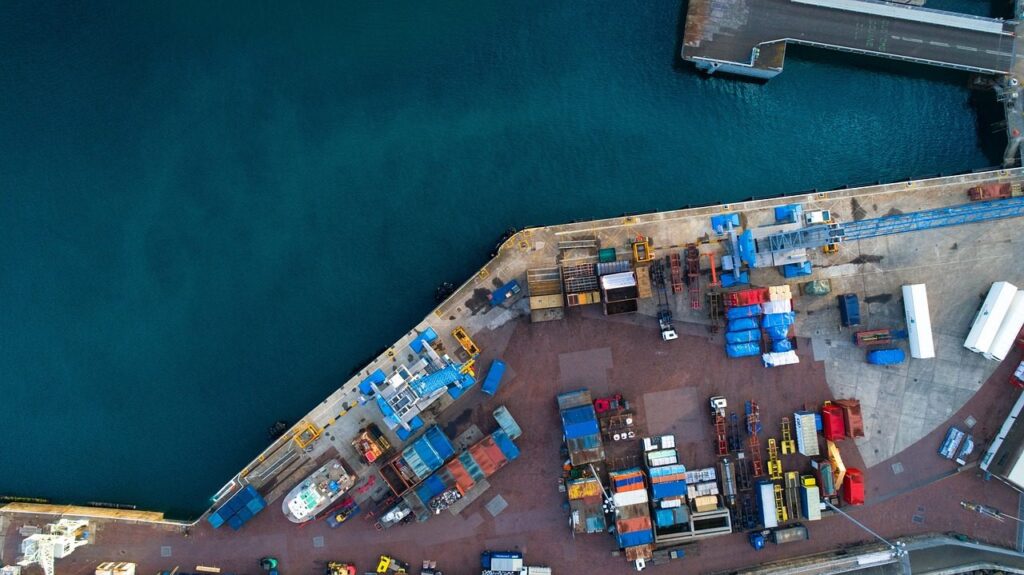
Photo: port quay seen from above, by StockSnap, Pixabay. Export values are at current prices, so a change can reflect prices as well as volumes. Percentages compare with January to September 2025.
Planning a shipment? Request a quote with every fee included upfront, or talk to our team in Tunisia: +216 70 295 255, info@kyranislogistics.com.

Comments
Ask a question or share your experience.
No comments yet. Be the first to ask a question.