
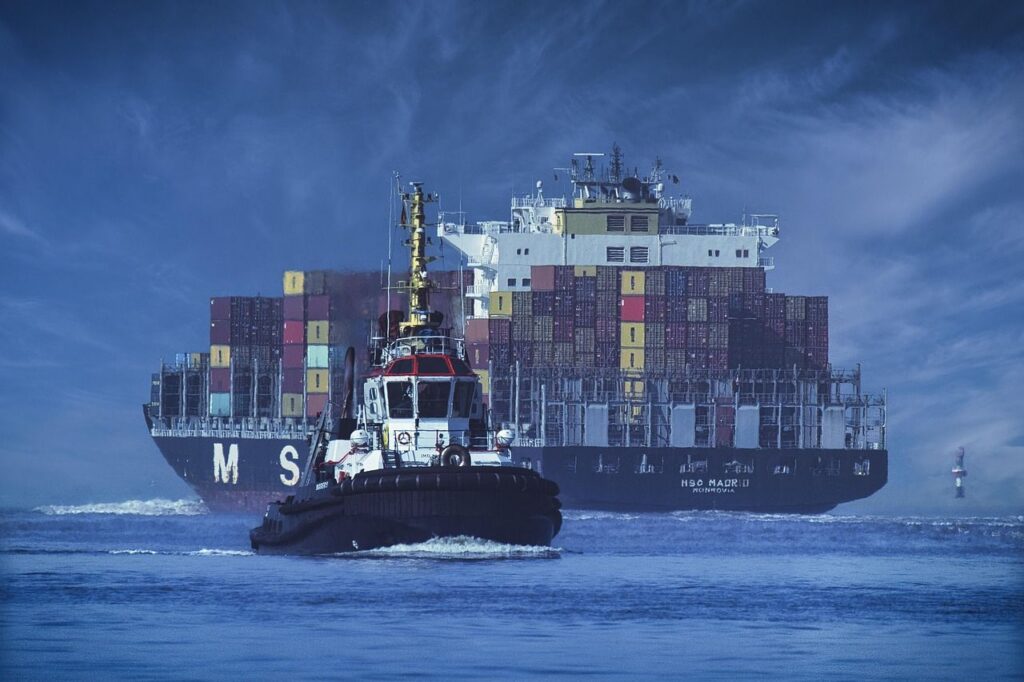
Did you know that 4,026 ships called at Tunisia's commercial ports in 2025, and that most of them belong to one of nine families? Each is built for one kind of cargo, and the shape of the hull tells you which. Here are the nine types, what they carry, how to recognise them from the quay, and where they call in Tunisia. Figures from the port authority OMMP for 2025 and the first half of 2026.
1. Container ship
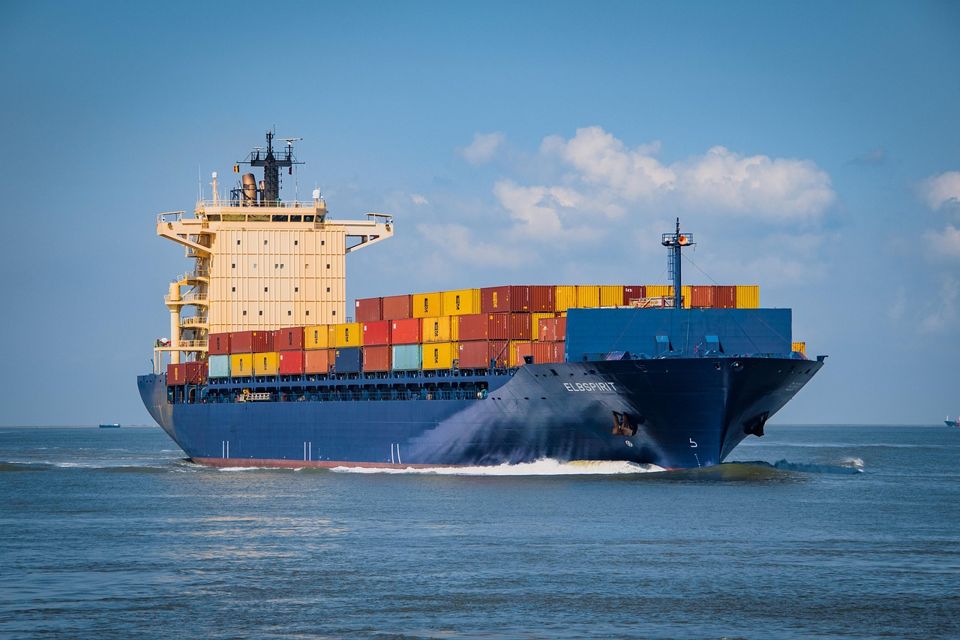
Boxes: 20- and 40-foot containers with almost anything inside, from shoes to machines to frozen fish in reefer containers. Around 90% of general goods in world trade travel this way.
How to recognise it: A flat deck stacked with containers, the bridge and the accommodation block set well aft or amidships, and cell guides in the holds. The largest carry over 24,000 TEU; the feeders that serve Tunisia carry 1,000 to 3,000.
In Tunisia: Radès handles 76% of Tunisia's container traffic in TEU and 79% of its containerised tonnage. The berths are 8.8 metres deep, so the big ships stop at Marseille, Genoa or the Maltese hubs and feeders bring the boxes across. Tunisia moved 280,691 TEU in the first half of 2026.
2. Ro-Ro ship
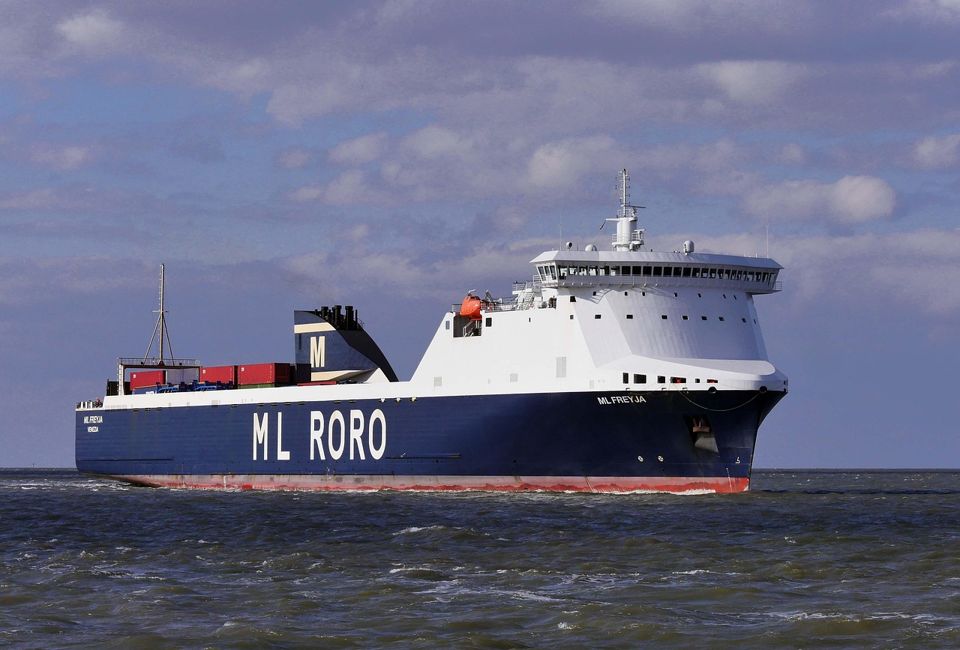
Anything on wheels: trucks and trailers, cars, buses, machinery on low-loaders. The cargo drives on and off over a ramp, hence roll-on, roll-off. Ferries that carry passengers and trucks are the Ro-Pax variant.
How to recognise it: A high, boxy hull with no cranes and few openings, a stern ramp and often a side ramp, and a long row of ventilation grilles along the car decks.
In Tunisia: The trailer route from Marseille and Genoa to Radès is the backbone of fast freight between Europe and Tunisia: Radès handles 80% of the country's rolling units. La Goulette, next door, took 827,455 passengers and 337,569 vehicles in 2025.
3. General cargo ship
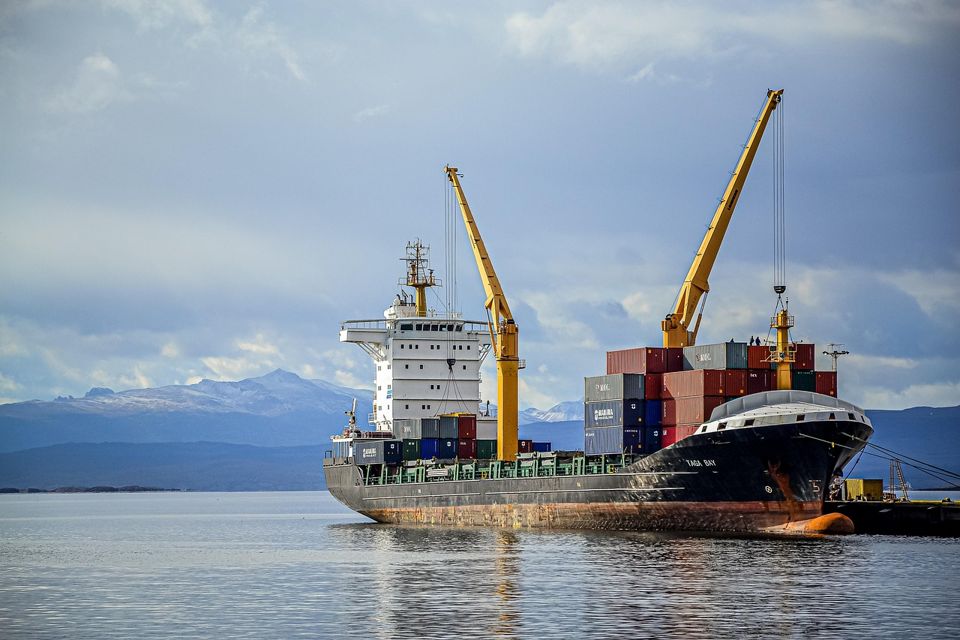
Everything that is not in a box and not poured: steel coils and pipes, bagged goods on pallets, timber, project cargo such as transformers or wind turbine blades. Multipurpose versions also take containers on deck.
How to recognise it: Two or three cargo holds with hatch covers, its own cranes or derricks between them, and a small size: most are under 150 metres. The cranes make it independent of the port's equipment.
In Tunisia: Sfax, Sousse and Bizerte have general cargo quays; Radès has its industrial products quay. Tunisia imported 5.9 million tonnes of general cargo in 2025, 9% more than in 2024.
4. Bulk carrier
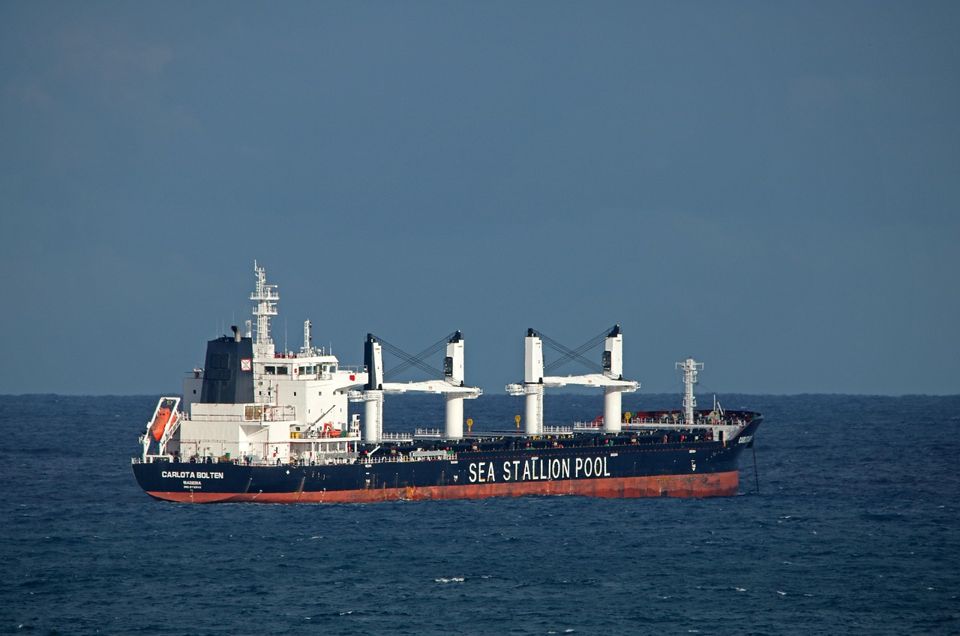
Dry cargo poured loose into the holds: wheat and barley, sugar, cement clinker, coal and petroleum coke, iron ore, sulphur, fertiliser. It is loaded by conveyor or grab and unloaded by grab or pneumatic unloader.
How to recognise it: A long hull with a row of large hatches, no containers, a bridge far aft. Smaller ones carry their own cranes with grabs; the large Capesize ships have none.
In Tunisia: Wheat and barley arrive in bulk at the cereal quays of Radès, with its 30,000-tonne silo, and Bizerte; sugar at Bizerte's sugar quay; sulphur for the chemical plants at Gabès; phosphate fertiliser leaves the same way.
5. Oil tanker
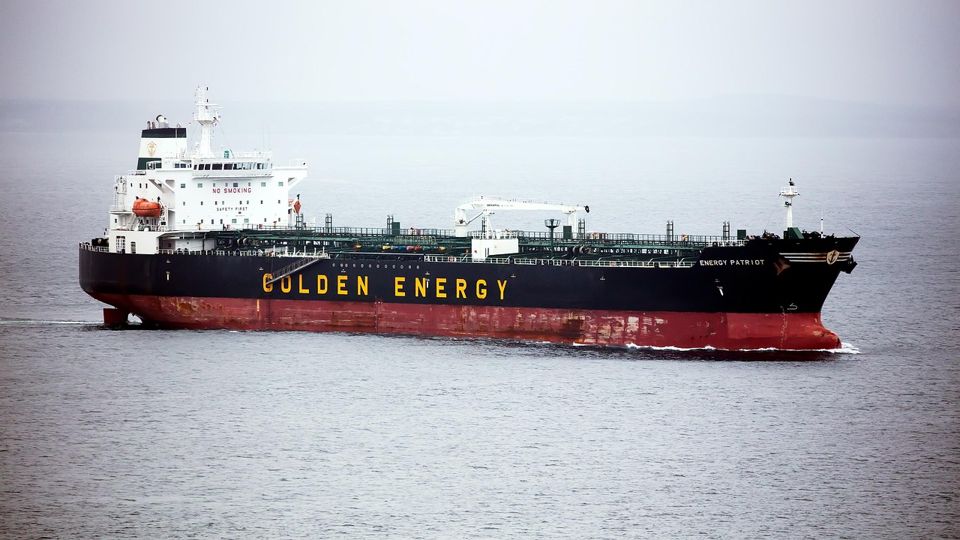
Crude oil, or refined products such as diesel, petrol, jet fuel and fuel oil. The crude carriers are the giants; the product tankers that serve Tunisia are much smaller.
How to recognise it: A low, flat deck with no hatches, a web of pipes and manifolds amidships, a raised walkway, and the bridge at the stern. Tankers sit deep in the water when loaded.
In Tunisia: Hydrocarbons are the largest tonnage in Tunisian ports: 8 million tonnes in 2025. Bizerte is dominated by oil traffic, with two oil berths next to the refinery; La Skhira loads refined products, 867,000 tonnes in 2025.
6. Chemical tanker
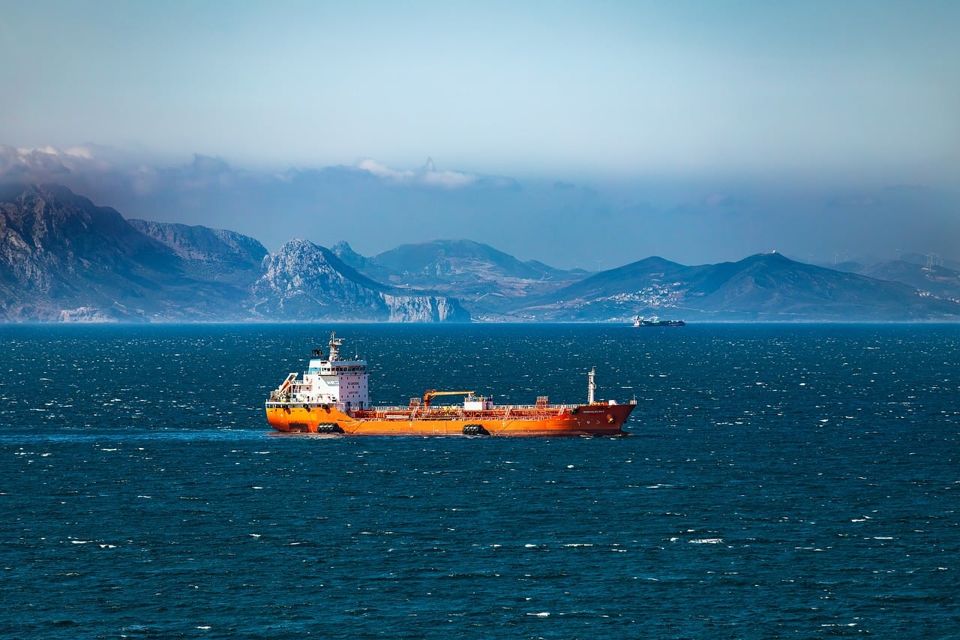
Liquid chemicals and edible oils: phosphoric acid, sulphuric acid, caustic soda, methanol, vegetable oils and even wine. Each grade has its own tank, often stainless steel or coated, so one ship can carry dozens of products at once.
How to recognise it: Like a small tanker, but with many small tanks visible as a grid of hatches and a forest of separate pipes and manifolds on deck, one per tank.
In Tunisia: Gabès is Tunisia's chemical port: ammonia and sulphur come in, phosphoric acid and fertilisers go out to the plants' customers. Tunisian olive oil also leaves in bulk, though mostly in flexitanks inside containers rather than on chemical tankers.
7. Gas carrier
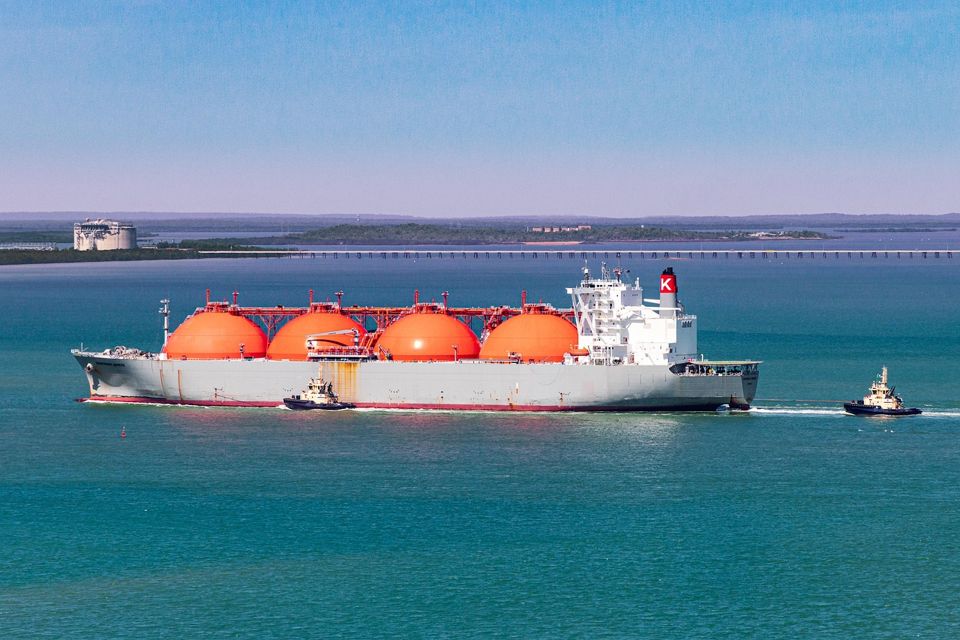
Gas kept liquid: LPG (butane and propane) under pressure or chilled, LNG at minus 162 degrees, and ammonia for fertiliser plants.
How to recognise it: Unmistakable: large spherical or cylindrical tanks rising above the deck, or a high, smooth hull hiding the insulated tanks of an LNG carrier.
In Tunisia: Butane and propane for Tunisian households and industry arrive on small gas carriers at the oil and gas quay of Radès and at Gabès, which also receives the ammonia for its fertiliser plants.
8. Reefer ship
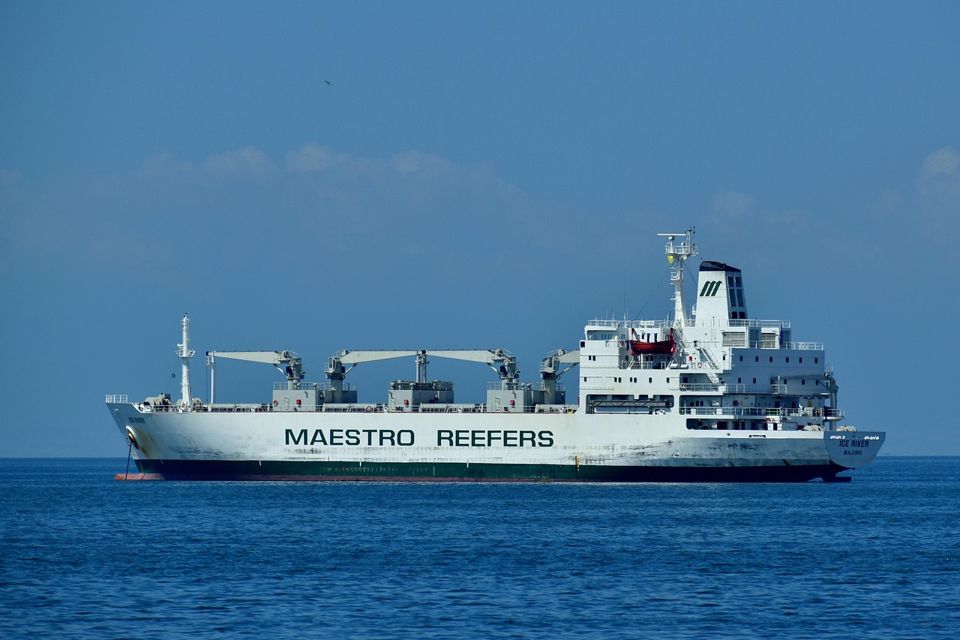
Perishables that need cold all the way: bananas, citrus, meat, fish. The holds are insulated and refrigerated; pallets go in through side doors.
How to recognise it: A sleek white hull (white reflects heat), a tall superstructure, several small hatches, side-loading doors, and a higher speed than a cargo ship of the same size.
In Tunisia: Specialised reefer ships are rare at Tunisian ports: most chilled and frozen cargo, Tunisian fish and dates included, now travels in reefer containers on ordinary container ships, plugged in on deck. Our fresh fish and seafood page explains how.
9. Livestock carrier
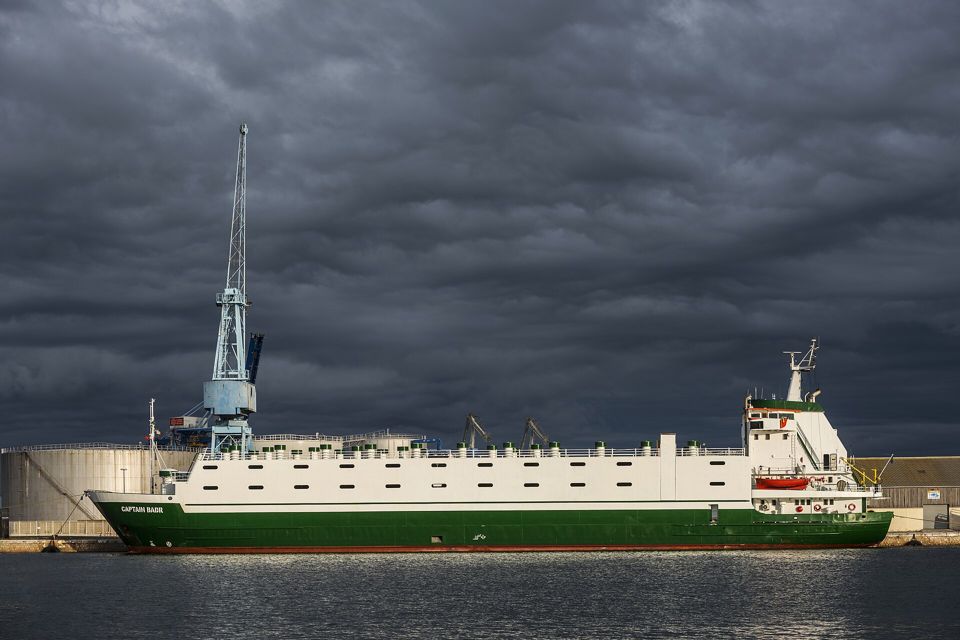
Live animals: cattle, sheep and goats, with their feed and water, on several open or ventilated decks, with a vet on board.
How to recognise it: Tall, with many open decks that look like a multi-storey car park and large ventilation fans; many are converted ferries or container ships.
In Tunisia: Tunisia imports breeding cattle, mostly from France, Ireland, Italy and Romania, and live sheep before Eid: 15,000 to 20,000 head were planned for 2026. They arrive on this kind of ship, under veterinary control at the quay.
How to tell them apart from the quay
- Boxes stacked on deck: container ship.
- A high closed hull with a ramp at the stern: Ro-Ro.
- Cranes between the hatches: general cargo ship or small bulk carrier.
- Large hatches, no cranes, bridge far aft: bulk carrier.
- Flat deck with pipes and no hatches: tanker. Many small manifolds: chemical tanker.
- Spheres or domes above the deck: gas carrier.
- White hull and side doors: reefer. Open decks like a car park: livestock carrier.
Which one carries your goods
For most importers and exporters the answer is the first two. Pallets, cartons and machines travel in a container on a feeder ship, or in a trailer on a Ro-Ro from Marseille or Genoa when speed matters more than price. Project cargo too large for a container goes on a general cargo ship or on a Ro-Ro as a wheeled load. Bulk, tankers and gas carriers are the world of charterers who fill a whole ship.
What we recommend
- Pallets and cartons: a container, shared (LCL) or your own (FCL). Our post on container types says which box fits, and the volume calculator tells you whether a 20-foot is enough.
- Urgent freight from France or Italy: a trailer on the Ro-Ro, door to door in a few days. Ask our sea freight team which departures suit you.
- Chilled or frozen goods: a reefer container, plugged in from your door to Radès. Our fresh fish and seafood page lists what to prepare.
- Out-of-gauge machines and project cargo: tell us the dimensions and weight; we check whether a flat rack, a general cargo ship or a Ro-Ro is the better route.
- Whatever the ship, ask for a quote with every fee included, and track your container, bill of lading or air waybill with our tracking tool.
Sources
- OMMP, the port of Radès: specialisation, shares of national traffic, quays
- OMMP, the port of Bizerte-Menzel Bourguiba: oil traffic, specialised quays
- OMMP, the port of Gabès: chemical products in and out
- La Presse, OMMP commercial port activity 2025, 5 October 2026
- OMMP, home page: traffic in the first half of 2026
- World Organisation for Animal Health, Tunisia country report, January 2026
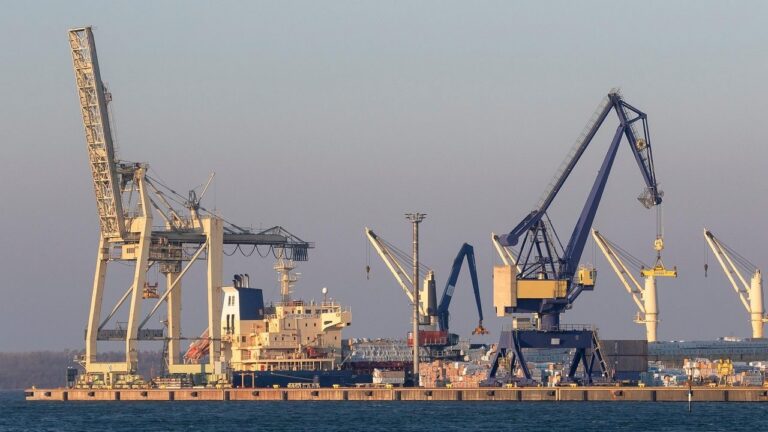
Cover: a container ship and its tug, by Peter_Lindenau, Pixabay. Ship sizes and recognition marks are general maritime practice; port figures are OMMP's for 2025 and the first half of 2026.
Planning a shipment? Request a quote with every fee included upfront, or talk to our team in Tunisia: +216 70 295 255, info@kyranislogistics.com.
Comments
Ask a question or share your experience.
No comments yet. Be the first to ask a question.