
For several years European manufacturers have been saying the same thing: after the pandemic and the Red Sea crisis, they want part of their supply chain closer to home. The word for it is nearshoring, and Tunisia, two days by sea from Italy, is one of the countries that should gain. The 2026 figures now let us check how far it has really gone.
What nearshoring means
Nearshoring means buying or producing in a country close to your market instead of on the other side of the world. For a European company that usually means North Africa, Turkey or Eastern Europe instead of Asia. The price per piece may be a little higher, but the goods arrive in days rather than weeks, stocks can be smaller, a design change reaches the factory faster and one blocked canal no longer stops the assembly line.
Exports and investment in 2026
From January to September 2026 Tunisia exported goods worth 50.4 billion dinars, 8.6% more than a year earlier, according to the National Institute of Statistics (INS). The European Union took 70.2% of it. Mechanical and electrical industries, the sector most closely tied to European factories, grew 9.9%. Investment points the same way: in the first half of 2026 Tunisia received 1,929.5 million dinars of international investment, 11.5% more than a year earlier, and 72% of the direct investment went into manufacturing, according to the investment agency FIPA. FIPA aims for 4 billion dinars over the whole year, against about 3.5 billion in 2025.
What Italy buys from Tunisia
Trade with Italy shows the shift most clearly. Over the twelve months to May 2026, Italian imports from Tunisia were almost flat in total, up 2.5% to about 3.68 billion US dollars. Inside that total, oil fell sharply while factory parts grew: insulated wire and cable, mostly wiring harnesses for cars, rose 26.9%, and switches and protective gear for electrical circuits doubled.
This is what nearshoring looks like in practice: not new products, but more of the parts that European assembly lines need every day, made in Tunisia and shipped across the Mediterranean in a few days.
Why transport decides
Nearshoring only works if the short distance turns into short, reliable transit times. In January 2026 Maersk opened an express sea service between Italy and Tunisia with a transit time of 2 days and 7 hours, linked to ro-ro connections through Cagliari, and presented it as support for Europe's nearshoring. Add the ro-ro and truck links from Tunisian ports to Marseille and Genoa, and a part made in Tunisia can reach a European assembly line within the week. From East Asia the same part spends several weeks at sea, and longer when ships go round Africa.
What the figures don't show
The trend is real, but narrow. Textiles, clothing and leather, for a long time Tunisia's best-known nearshoring story, fell 4.7% in the first nine months of 2026. Exports to France, Italy and Germany grew only 3.9% to 5.4%. Imports grew faster than exports, by 13.1%, so the trade deficit widened to almost 21 billion dinars, partly because factories import the materials they assemble. And the growth is concentrated in a few sectors: wiring, electrical parts and components for cars.
What it means for your shipments
- Exporters of car parts and electrical components: plan regular, smaller shipments rather than one full container a month, because European buyers increasingly order just in time. See our pages for automotive parts and electrical and electronics.
- Check which carrier sails when: our Next sailings page lists the coming Maersk and Hapag-Lloyd departures on our busiest lanes.
- Textile and clothing exporters: competition for European orders is sharper, and speed and reliable delivery dates are your best argument. See textiles and clothing.
- Importers of materials for assembly: a short, predictable inbound leg matters as much as the outbound one. Ask us for a quote covering both directions.
Sources
- Challenges TN: Tunisia's foreign trade to the end of September 2026 (INS figures)
- Tera Finances: international investment in the first half of 2026 (FIPA figures)
- GTAIC: Italian imports from Tunisia, June 2025 to May 2026 (customs data)
- Maersk: the Italy–Tunisia express service, January 2026
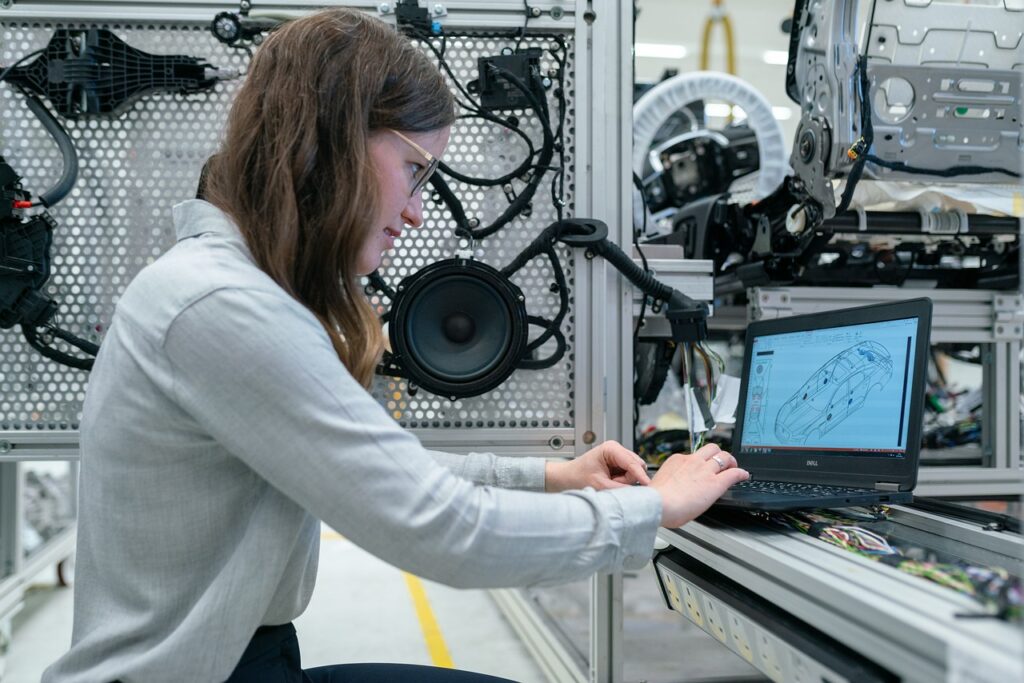
Photo: engineer at a car electronics test bench, by ThisIsEngineering, Pixabay. Italian import figures come from customs declarations compiled by GTAIC, in current US dollars; the oil bar adds crude oil and refined products. Percentages compare with the same period a year earlier.
Planning a shipment? Request a quote with every fee included upfront, or talk to our team in Tunisia: +216 70 295 255, info@kyranislogistics.com.

Comments
Ask a question or share your experience.
No comments yet. Be the first to ask a question.