
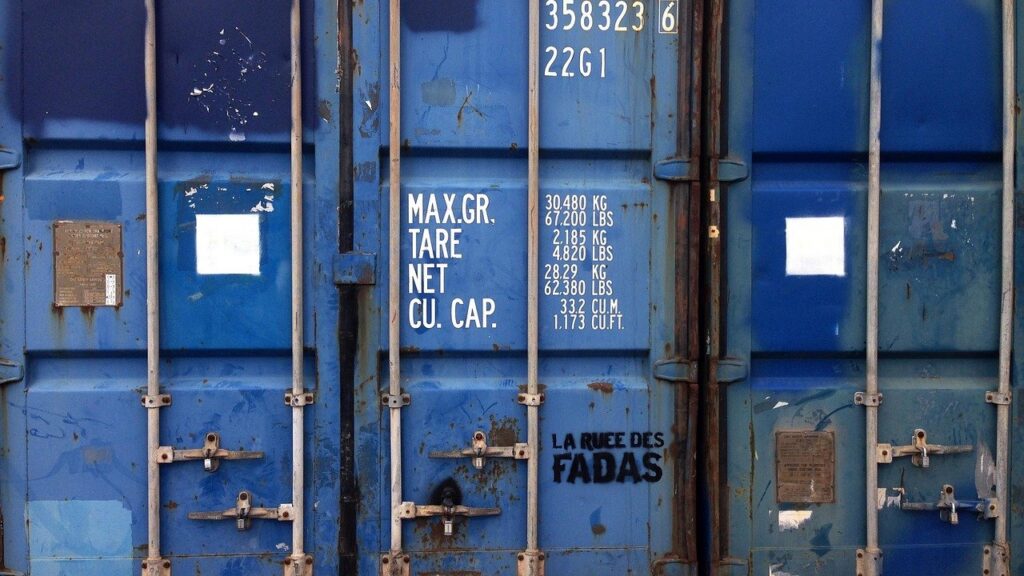
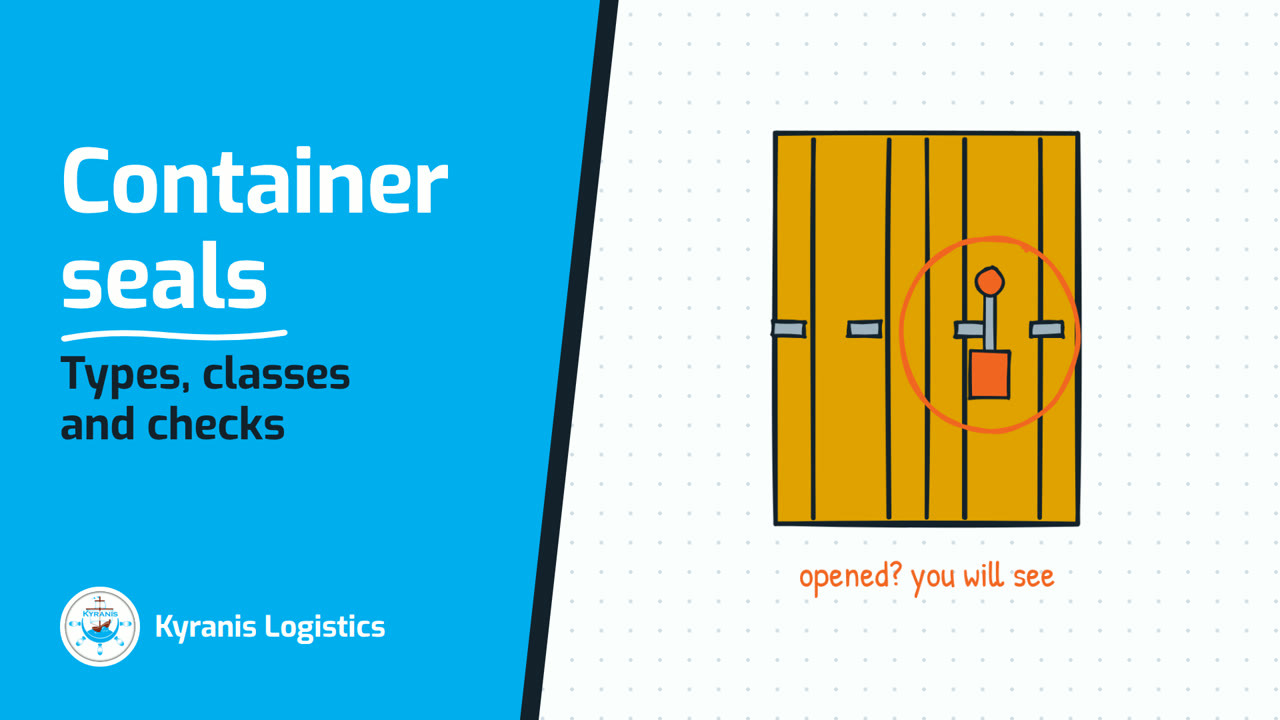
Every loaded container travels with a small numbered seal on its doors. It does not stop a determined thief, but it shows whether the doors were opened on the way. The seal number is written on the shipping documents, so at arrival anyone can check that the container is still the one that was closed at loading. If something is missing, the seal is often the first evidence.
What a seal does
A container seal is a one-time lock: once it is closed it can only be removed by cutting it, and it cannot be used again.
Each seal carries a unique number. That number goes on the bill of lading and the other shipping documents, so the port, customs and the receiver can compare the seal on the doors with the papers.
The main types of seal
| Type | What it is | Usual class |
|---|---|---|
| Bolt seal | A steel bolt pushed into a locking barrel; removed with bolt cutters | H, high security |
| Cable seal | A steel cable pulled tight through a locking body | S or H, depending on the model |
| Plastic seal | A numbered plastic strip pulled tight, like a cable tie | I, indicative |
| Metal strap seal | A thin numbered metal strip closed on itself | I, indicative |
| Electronic seal | A seal with a chip that records or reports when it is opened | Depends on its mechanical part |
The class is printed on the seal itself. Bolt seals are the usual choice for sea containers; plastic and strap seals suit trucks, bags and inner doors rather than a container crossing the sea.
The three classes of ISO 17712
- I, indicative: shows that someone opened the doors, but is easy to break. Plastic and thin metal seals are in this class.
- S, security: some resistance, but light tools are enough to remove it.
- H, high security: a real barrier that needs bolt cutters or cable cutters. Its strength is tested in a laboratory.
- For goods going to the United States, members of the American customs security programme C-TPAT must use H-class seals that meet the current ISO 17712, with the laboratory certificate to show it.
Who puts the seal on, and where
- For a full container (FCL), the shipper or the packer seals it right after loading.
- For groupage (LCL), the container is sealed by whoever loads it, usually the consolidator's warehouse once all the shipments are inside.
- The seal goes on the handle of the right-hand door, or on the secure cam position when the container has one.
- Customs may cut the seal to inspect the goods. They then put on a new seal, and the new number must be written down and passed on with the papers.
Before the doors are opened: four checks
- Look: is the seal there, in one piece, on the right door and locking bar?
- Compare: is the number on the seal the same as on the bill of lading or the delivery papers?
- Pull: tug the seal firmly; a good seal does not come apart.
- Turn: twist it; the bolt or cable must not spin loose in its body.
The American customs call this the View, Verify, Tug and Twist check. It takes a minute and is worth doing on every container, before the seal is cut.
If the seal is missing, broken or has another number
- Do not open the doors yet, and do not cut the seal.
- Take dated photos of the seal, the number and the door hardware.
- Write the problem on the delivery receipt before you sign it, and keep a copy.
- Tell your forwarder and your insurer at once. Some terminals hold a container whose seal is missing or does not match until customs has cleared it. For the time limits of a claim, see damaged cargo: the claim deadlines by sea, road and air.
Without a note at delivery it is hard to prove later that the goods were lost on the way. Cargo insurance is explained in why carrier liability is not enough.
In short
- Every loaded container is closed with a one-time seal that carries a unique number.
- The class is I, S or H; sea containers usually get an H-class bolt seal.
- The seal number must match the bill of lading.
- Check the seal before opening, and write any problem on the delivery receipt.
Shipping a full container or groupage? Contact us: we write the seal number on your documents, check it at arrival, and tell you at once if anything does not match.
Sources
- U.S. Customs and Border Protection, CTPAT job aid: seal security procedures (2021)
- Marine Insight: Container seals, importance, types and requirements
- Wikipedia: Security seal
- APM Terminals Mumbai: Advisory on container seal details (2021)
Read on 23 November 2026. Rules for seals can differ by country and by shipping line; ask us for your route.
Planning a shipment? Request a quote with every fee included upfront, or talk to our team in Tunisia: +216 70 295 255, info@kyranislogistics.com.
Comments
Ask a question or share your experience.
No comments yet. Be the first to ask a question.