
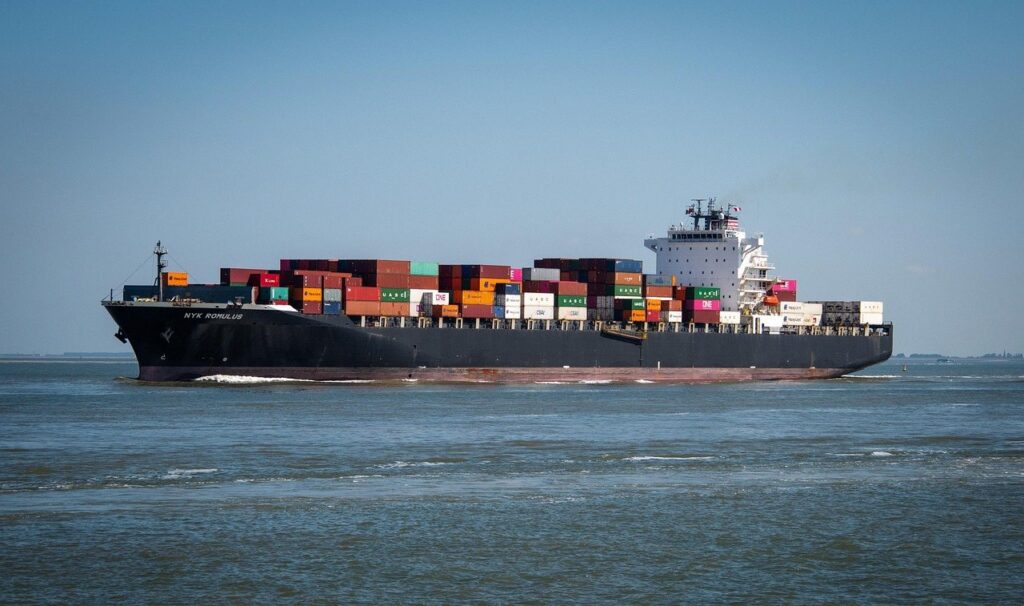
For almost two years most container ships between Asia and Europe avoided the Red Sea and sailed around Africa, adding a week or more to every voyage. Since the summer of 2026 the big lines have been coming back through the Suez Canal, and by late October most Asia–Mediterranean capacity was using the canal again. For importers and exporters in Tunisia, this is the most important change on the sea routes this year.
| Measure | Late October 2026 |
|---|---|
| Far East–Mediterranean capacity on Suez services | 70 % |
| Far East–Europe capacity on Suez services | 63 % |
| Far East–North Europe capacity on Suez services | 58 % |
| Direct Far East–Europe services through the canal | 24 of 46 |
| Large container ships through the canal, July–September | 166 (16 a year earlier) |
| Average time saved on returned Asia–Europe services | about 7 days |
Why Tunisia gains more than most
The Mediterranean is the trade where the return is furthest ahead. A ship going around Africa to reach the Mediterranean sails the longest detour of all, through Gibraltar and back east, so the canal saves Mediterranean services the most time and fuel. Containers from China, India and the Gulf to Radès and Sfax usually change ship at a Mediterranean hub, so a faster mainline voyage means an earlier connection to Tunisia.
Shorter and more regular transit times mean less stock in transit, less money tied up in goods, and safer planning for factories that wait for parts. More ships on the shorter route also means more capacity each week, which tends to put pressure on freight rates.
What to watch during the transition
- Bunched arrivals: ships that left on the long route and ships on the short route arrive in the same weeks. Ports in North Europe already report overlapping schedules, and hubs can be busy.
- Missed connections: when a mainline ship arrives early or late at a Mediterranean hub, the feeder to Tunisia may leave without the container, which can cost several days.
- Security: the risk around Bab el-Mandeb has not gone away. Lines can switch services back to the Cape route at short notice if the situation changes.
- Surcharges: emergency and war-risk surcharges added during the crisis do not always disappear at the same speed as the detour. Ask which surcharges still apply.
- Schedules: lines are redesigning their loops. A service number can keep its name and change its route, its ports and its transit time.
What importers and exporters should do now
- At booking, ask whether the service sails through the Suez Canal or around Africa, and the planned transit time to Radès or Sfax for that sailing.
- Compare quotes on the same routing: a cheaper offer on the Cape route can cost more in time and stock.
- Keep a few days of buffer until the schedules settle, especially for goods that feed a production line.
- Check your cargo insurance: war and strikes risks are excluded from the standard clauses and need the war and strikes clauses on the policy.
- Plan for Chinese New Year early: it falls on 6 February 2027, factories close for one to two weeks, and the sailings before it fill up fast.
What comes next
The industry expects a broader return in the first quarter of 2027, if the Red Sea stays calm. Nobody can promise it. What a shipper can do is ask the right questions at every booking, so that each shipment takes the route that is right for it. Our sea freight team follows the services that call at Tunisian ports and tells you, for each booking, the routing, the transit time and the risks.
Sources
- Metro, “Suez Canal return gathers pace”, 27 October 2026
- Financial Ports, Suez Canal Authority figures for the third quarter of 2026, 23 October 2026
Shares of capacity on the ten largest container networks, late October 2026. Figures change every week; the routing of each sailing is confirmed at booking.
Planning a shipment? Request a quote with every fee included upfront, or talk to our team in Tunisia: +216 70 295 255, info@kyranislogistics.com.

Comments
Ask a question or share your experience.
No comments yet. Be the first to ask a question.