
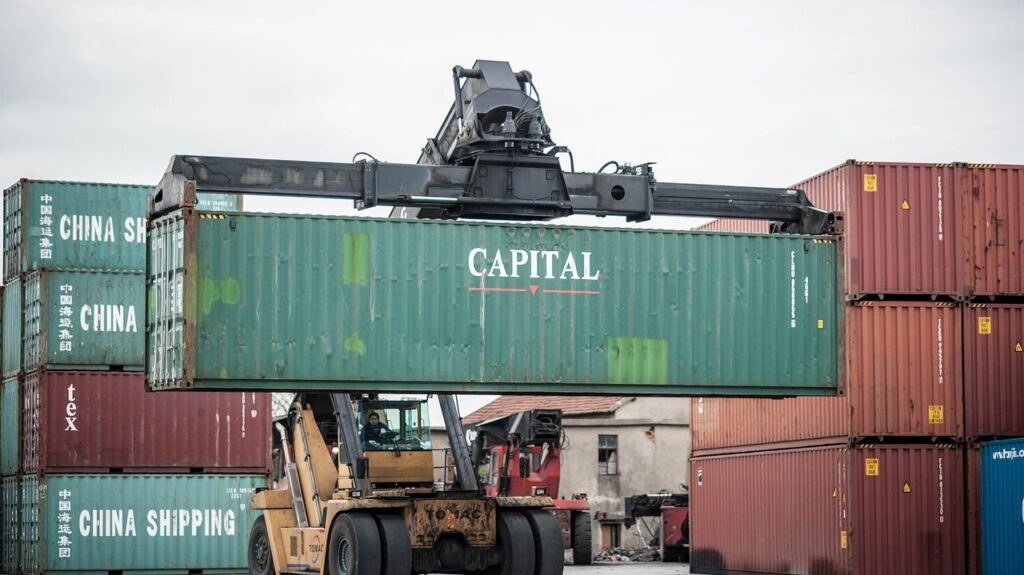
More and more Tunisian businesses buy directly from Chinese factories. The goods are often cheap; what costs time and money is the import itself. Here are the eight steps, in the order Tunisian rules set them, with what to prepare at each one.
The 8 steps
1. Get a customs code
Every importer needs a customs code: it is your identifier on TTN, the electronic one-stop shop that links customs, banks, ports and forwarders. You apply at the customs office nearest to you or at the APII one-stop shop.
2. Check the HS code and any restrictions
The HS code of your product decides the duties and whether the goods need an import authorisation from the Ministry of Commerce or a technical control at import. Check it before you order. See HS codes explained.
3. Agree the contract and the Incoterm
Agree price, quantity, quality, delivery date and the Incoterm (FOB, CIF and others) with the supplier, and ask for a proforma invoice. The Incoterm decides who pays the sea freight and who carries the risk. See importing from China: 6 terms to understand.
4. Domicile the import at your bank
Before the goods are cleared, the import is domiciled at an approved bank under a foreign trade document (TCE): the bank checks the invoice and the product code. The bank pays the supplier only against documents showing that the goods were shipped to Tunisia.
5. Ship from China
Full containers (FCL) or shared ones (LCL) from Shenzhen, Shanghai, Ningbo and the other Chinese ports to Radès or Sfax take about 30 to 40 days, often with a transhipment in the Mediterranean. See sea freight from China to Tunisia and what makes up the price of a container from China.
6. Before the ship arrives
The shipping agent files the manifest before arrival, so that customs and the port know what is coming. Your commercial invoice, certificate of origin and bill of lading should be ready by then.
7. Customs clearance
The detailed declaration is filed on TTN. Customs checks it, sometimes inspects the goods, and works out the duties and taxes; once they are paid, the release note is issued. See how import duties in Tunisia are calculated and customs clearance.
8. Removal from the port and payment
With the release note, the container leaves the port after the exit checks (scanner, weighing if needed) and is delivered. The bank then settles the payment and closes the import file (the TCE).
What is specific to goods from China
Tunisia has no free-trade agreement with China, so Chinese goods pay the normal customs duty for their HS code, without the preferences that goods of EU origin enjoy. Since a Central Bank of Tunisia circular of March 2026, imports of some goods considered non-priority must be paid from the importer's own funds rather than bank credit: ask your bank early whether your goods are concerned. And plan for the long transit: an order placed today usually arrives five to seven weeks later, production time not included.
What to do now
- Send us the HS code or a description of your product and the supplier's port: we check the duties and the documents before you order. See customs clearance.
- Compare the full cost, freight, duties and taxes, before you sign: ask us for a quote.
Sources
- CCI Centre: Manual of import procedures (2025)
- U.S. International Trade Administration: Tunisia, import requirements and documentation
- AllAfrica (Tunisia): Central Bank, imports that do not need own funds (2 April 2026)
Photo: containers at a terminal, by snoku, Pixabay. General information: the rules for your goods are confirmed with your quote.
Planning a shipment? Request a quote with every fee included upfront, or talk to our team in Tunisia: +216 70 295 255, info@kyranislogistics.com.

Comments
Ask a question or share your experience.
No comments yet. Be the first to ask a question.