
Air freight is the fastest way to move goods, and the most expensive per kilo. Yet the price is not a mystery: it follows a few rules that are the same at almost every airline. Here is how the bill is built, with examples you can redo for your own shipment.
Chargeable weight: the higher of two weights
An aircraft usually runs out of space before it reaches its weight limit, so airlines do not charge on the scale weight alone. They compare the actual gross weight, packaging and pallet included, with a volumetric weight, and they charge the higher of the two. That is the chargeable weight.
The volumetric weight is length × width × height in centimetres, divided by 6,000. In other words, one cubic metre counts as 167 kg. Each piece is measured at its longest, widest and highest point, and the result is rounded up to the next half kilo. Express couriers often divide by 5,000 instead, which makes bulky parcels dearer.
Three examples
The same rule gives very different results, depending on how dense the goods are.
| Shipment | Actual weight | Volume | Volumetric weight | Chargeable weight |
|---|---|---|---|---|
| 2 cartons of 60 × 50 × 40 cm, 25 kg each | 50 kg | 0.24 m³ | 40 kg | 50 kg |
| 1 pallet of 120 × 80 × 150 cm, 180 kg | 180 kg | 1.44 m³ | 240 kg | 240 kg |
| 10 cartons of 50 × 40 × 40 cm, 8 kg each | 80 kg | 0.8 m³ | 133.5 kg | 133.5 kg |
Dense goods, above 167 kg per cubic metre, pay on their actual weight. Light and bulky goods pay on their volume: in the third example the airline charges 133.5 kg for 80 kg of goods.
The rate per kilo
The chargeable weight is multiplied by a rate per kilo, which depends on the route and on the size of the shipment.
- Minimum charge: Every shipment pays at least a fixed amount, however small it is.
- Normal rate: The rate per kilo for small shipments, on most routes below 45 kg.
- Quantity rates: Lower rates per kilo from a given weight, for example from 45, 100, 300, 500 and 1,000 kg. The heavier the shipment, the lower the rate.
- Special rates: Perishables, dangerous goods, live animals and valuables often have their own rates.
A detail worth knowing: when a shipment is just below a weight break, paying for the higher weight can be cheaper. With invented figures: 90 kg at €3.00 per kilo costs €270, while the 100 kg rate of €2.60 brings the same shipment to €260. The airline then charges it as 100 kg.
What is added to the freight
The rate per kilo is only one part of the invoice. A complete quote also shows:
- the fuel surcharge and the security surcharge, charged per kilo, on the chargeable or the actual weight depending on the airline; some quotes show a single all-in rate instead;
- handling at the airport of departure and of arrival, and the air waybill fee;
- security screening of the cargo, where it is invoiced separately;
- export and import customs clearance;
- collection from the sender and delivery to the receiver;
- where they apply, a dangerous goods fee, and storage at the airport when the goods are collected late.
Which of these costs the seller pays and which the buyer pays depends on the Incoterm. See Incoterms 2020 explained and how a freight quote is built.
Five ways to pay less
- Reduce the volume: a carton that fits the product and a lower pallet cut the chargeable weight directly. See packing and palletising for export.
- Send the exact dimensions and weight of each piece with your request: a quote based on estimates is corrected once the airline has measured the goods.
- Group small shipments so that together they reach a weight break.
- Ask about a flight with a transfer or a slower service: it is often cheaper than the first direct flight.
- Compare with sea and road freight when the delivery date allows it. See air, ocean or road: choosing the right route.
What to do now
- Work out the volume and the chargeable weight of your shipment with our freight tools.
- Send us the dimensions, the weight, the airports and the date: we come back with a complete price. See our air freight service or ask us for a quote.
Sources
- Maersk: Air cargo chargeable weight
- ASEAN: Calculation of air freight, training material on the IATA TACT rules
- FreightWaves: How is air freight priced?
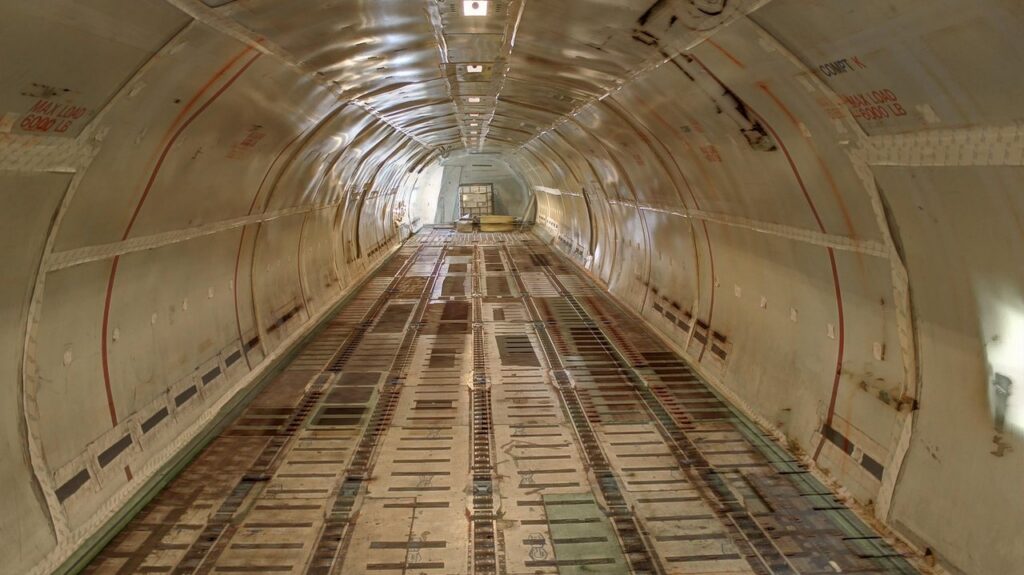
Photo: hold of a cargo aircraft, by Lenzpointer, Pixabay. General information: the figures in the examples are not our rates; the price of your shipment is confirmed with your quote.
Planning a shipment? Request a quote with every fee included upfront, or talk to our team in Tunisia: +216 70 295 255, info@kyranislogistics.com.

Comments
Ask a question or share your experience.
No comments yet. Be the first to ask a question.