
When your goods do not fill a container, they can share one with other shippers. This is groupage by sea, or LCL (less than container load). You pay for the space you use, but the invoice has more lines than the freight rate alone. Here is how it is built, with examples you can redo for your own shipment.
Weight or measurement: the higher of two figures
A shared container is sold by the space and the weight each shipment takes. The rate is therefore quoted per freight ton, also written W/M for weight or measurement: the carrier compares the volume in cubic metres with the gross weight in tonnes, and charges the higher of the two. One cubic metre counts as 1,000 kg.
The volume is length × width × height in metres, multiplied by the number of pieces; each piece is measured at its longest, widest and highest point, pallet included. By air, one cubic metre counts as 167 kg (see how air freight cost is calculated); by sea it counts as 1,000 kg. So almost all groupage cargo pays on its volume, and only very dense goods, such as tiles, metal parts or drums of liquid, pay on their weight.
Three examples
The same rule applied to three shipments, with a minimum of one freight ton.
| Shipment | Volume | Weight | Freight tons charged | Decided by |
|---|---|---|---|---|
| 4 cartons of 60 × 50 × 40 cm, 25 kg each | 0.48 m³ | 0.1 t | 1 | the minimum |
| 2 pallets of 120 × 80 × 150 cm, 300 kg each | 2.88 m³ | 0.6 t | 2.88 | the volume |
| 1 pallet of tiles of 120 × 80 × 100 cm, 1,800 kg | 0.96 m³ | 1.8 t | 1.8 | the weight |
The first shipment takes less than half a cubic metre and still pays for one freight ton: that is the minimum. The third weighs more than a tonne per cubic metre, so the weight decides.
The rate and the minimum
The number of freight tons is multiplied by a rate that depends on the route. With an invented rate of €60 per freight ton, the freight of the second example comes to €172.80.
Consolidators also set a minimum, usually one freight ton and on some routes two. Below it, every shipment pays the same freight, which makes very small shipments expensive for their size. Before you compare two offers, ask for the minimum and for the way the quantity is rounded.
What is added to the freight
The freight is often the smallest part of a groupage invoice. A complete quote also shows:
- at origin, the handling at the groupage warehouse (CFS, container freight station), where your goods are loaded into the container, usually per freight ton with a minimum;
- the carrier's surcharges, such as the fuel surcharge and the currency surcharge, also per freight ton;
- at destination, the terminal handling and the unpacking of the container at the warehouse, again per freight ton;
- fixed fees per shipment: the bill of lading, the release of the goods at destination and the customs clearance at both ends;
- collection from the sender and delivery to the receiver by truck;
- storage, if the goods are not collected within the free days.
The charges at destination are the ones that surprise: a low freight rate can hide high local charges. Compare offers on the total to your door, not on the freight rate. Which costs the seller pays and which the buyer pays depends on the Incoterm. See Incoterms 2020 explained and how a freight quote is built.
When a full container costs less
Per cubic metre, groupage costs more than a full container, because the goods pass through a warehouse at each end. As the volume grows, there comes a point where a 20-foot container of your own is cheaper, even half empty. It usually lies between 13 and 17 cubic metres and moves with the route and the market; we use about 15 as a rule of thumb. See 20GP or 40HQ: which container is right for your shipment.
Time counts too. Grouping the goods before departure and unpacking the container on arrival typically add three to seven days compared with a full container, although both travel on the same ship. And because groupage cargo is handled more often and stowed next to other goods, it needs sturdy packing. See packing and palletising for export.
Six ways to pay less
- Reduce the volume: cartons that fit the product and lower pallets cut the number of freight tons directly.
- Send the exact dimensions and weight of each piece with your request: the warehouse measures the goods again, and the invoice follows its figures.
- Group several small orders into one shipment: you pay one minimum and one set of fixed fees. See freight consolidation: one shipment instead of many.
- From about 13 cubic metres, ask for the price of a 20-foot container as well.
- Ask for the total price to your door, with the charges at destination listed.
- Collect the goods quickly on arrival, so that no storage is added.
What to do now
- Work out the volume of your shipment with our freight tools.
- Send us the dimensions, the weight, the number of pieces, the two addresses and the Incoterm: we come back with a complete price, groupage and full container compared. See our sea freight service or ask us for a quote.
Sources
- Cogoport: How to calculate volume and weight for ocean freight
- Marine Insight: What is CBM rate in shipping?
- GoFreight: LCL (less than container load)
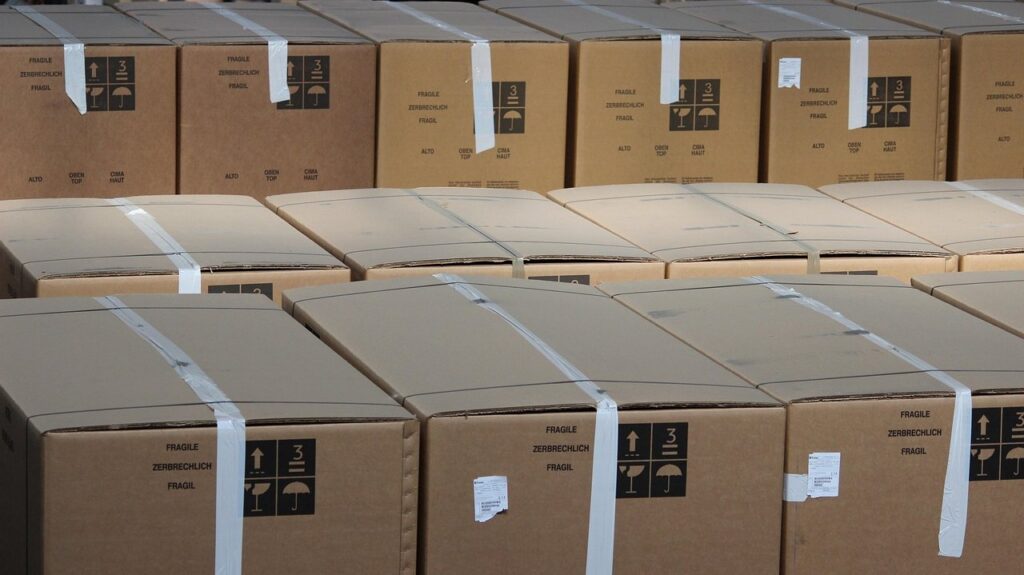
Photo: cartons in a warehouse, by JaumeJaquet, Pixabay. General information: the figures in the examples are not our rates; the price of your shipment is confirmed with your quote.
Planning a shipment? Request a quote with every fee included upfront, or talk to our team in Tunisia: +216 70 295 255, info@kyranislogistics.com.

Comments
Ask a question or share your experience.
No comments yet. Be the first to ask a question.